

“In the fire of my longing, my soul was made pure,
The illness that broke me became my own cure.
I rose from the ashes of what I had lost,
To find I was flying, no matter the cost.”
— Ibn al-Farid
Dear Visitors,
- Please note: This article openly discusses eating disorders and recovery, which may be triggering for some readers.
- Part 1: The Original Article – The complete story of Alia’s journey, her challenges, and her triumph.
- Part 2: Our Analysis – A deeper look into the key takeaways, cultural context, and lessons we can all learn from her experience.
“O Seeker, do not fear the night that tears your strength apart,
For healing is a secret gift placed inside a broken heart.
The body yields to spirit, when the spirit claims its goal,
And the longest, hardest journey is the triumph of the soul.”
— Dhul-Nun al-Misri
Alia Gamal El Deen: From Eating Disorder To 70.3
Worlds
How a Cairo basketball pro found purpose, recovery, and a start line at the IRONMAN 70.3 World Championship.
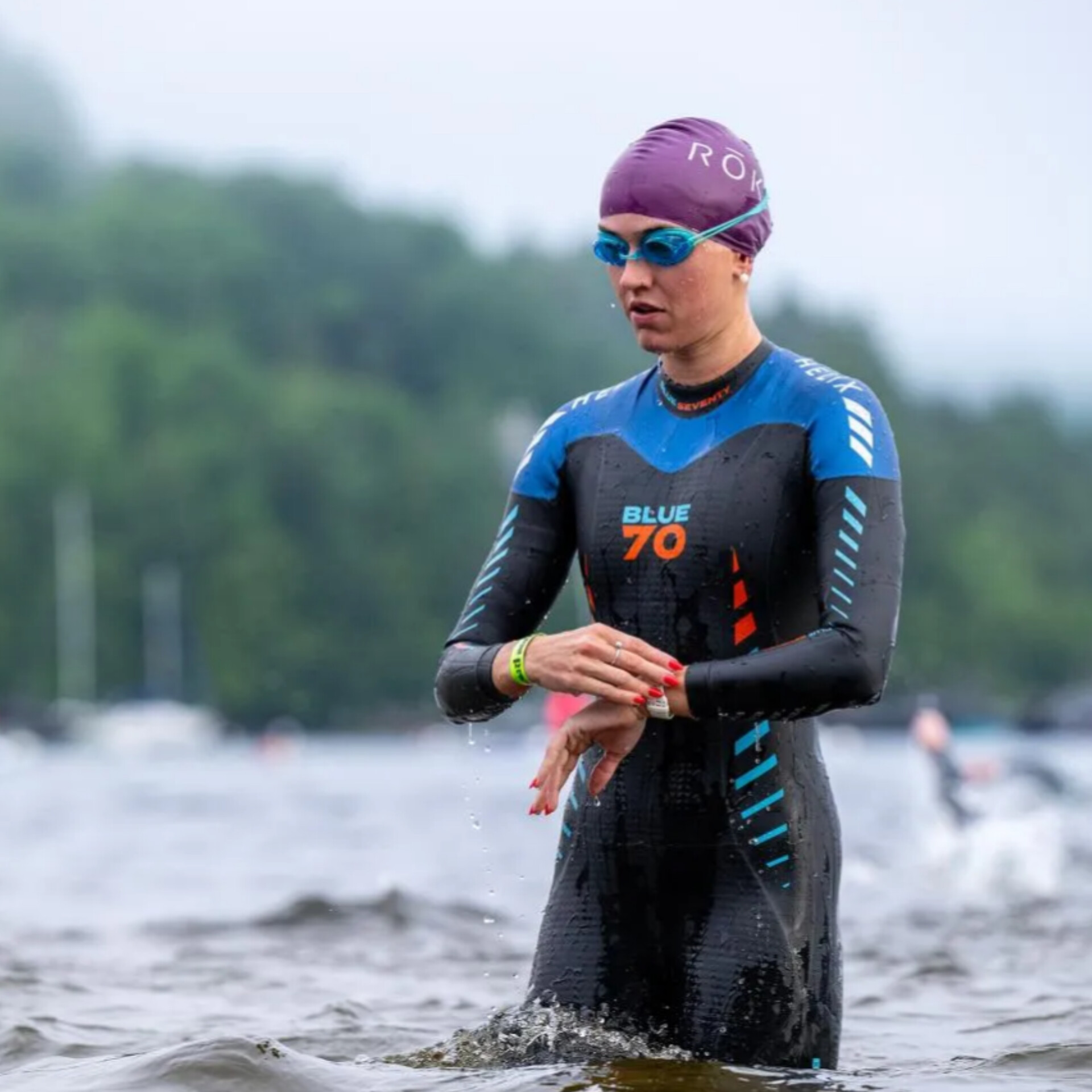
A note before you read: this story discusses eating disorders and recovery. Support resources are listed at the end of the article.
For 16 years, Alia Gamal El Deen was a professional basketball player on a Division 1 team in Cairo, Egypt. When she retired at 22, the competitive drive that had shaped her life had nowhere to go, and she lost her footing. Triathlon is the sport that helped her find it again.
At A Glance
- Athlete: Alia Gamal El Deen, triathlete and coach
- From: Cairo, Egypt
- Background: 16 years of professional Division 1 basketball
- Found triathlon: Late 2019, signing up for IRONMAN 70.3 Dubai
- Breakthrough: Qualified for the IRONMAN 70.3 World Championship in her first season
- World Championship: Lahti, Finland, 2023, finished 5:56:00
- Now: NESTA-certified triathlon coach at PowerRide
A Champion Without A Game
Alia started playing basketball at six and stopped at 22. Without a team or a season to train for, the structure that had defined her was suddenly gone.
“I started coaching CrossFit but realized that I cannot just do squats and deadlifts for the sake of doing squats and deadlifts,” Alia says. “I need to be training for something and competing. I need to have something to look forward to.”
Facing Recovery Openly
In the period after basketball, Alia developed an eating disorder involving binge eating and bulimia. It is a serious illness, and she has been open that recovery is a lifelong process she works through with the help of a therapist.
That openness is deliberate. “In Egypt, eating disorders are not talked about as much as they are abroad,” she says. “People are ashamed, but I am very open about it. A lot of people reach out to me, and as much as it makes me sad to know people suffer, it also makes me happy that I might be able to help them.”
Alia is clear that sport did not fix things on its own. Alongside therapy, training gave her back a sense of purpose and, over time, a relationship with food built around fueling her body rather than fighting it.
Finding Triathlon By Accident
Alia came to IRONMAN almost by chance. With no swim or bike background, she signed up for IRONMAN 70.3 Dubai in late 2019, only a few months before the race.
“I did not even really know what the Dubai race was. I thought it was an IRONMAN, then I realized there is also a half distance,” she says. “I signed up in October 2019 and started training on November 1st.”
She reached out to triathlon coach Maha Yacout of PowerRide, one of the best-known indoor cycling programs in Egypt. “I never cycled or did swimming, but I used to run 10Ks for fun. Maha was a bit hesitant, but she had faith in me,” Alia says. “I used someone else’s tri suit, watch, bike, and wetsuit. I had nothing.”
The First Race
The bike was the hardest part. Alia had logged only four outdoor rides before she had to cover 56 miles on race day, with no music and no spin coach to carry her along. She did it on her own.
The run gave her the thing that keeps so many athletes coming back: the camaraderie. Her favorite memory of the day is running the last seven kilometers alongside a Moroccan athlete she had just met.
“He told me this is an addictive game, but I just wanted to cross the finish line and give everyone’s stuff back,” Alia laughs. “He said, trust me, it will be different as soon as you cross the line. I cried at the finish, saw my brother, and told him I wanted to go home and find my next race.”
Racing On, And Giving Back
She qualified for the IRONMAN 70.3 World Championship on that first attempt. From there she kept racing: IRONMAN 70.3 Dubai in 2020 and 2022, IRONMAN 70.3 Egypt in 2021, and 70.3 Erkner in 2022. “This is how crazy I am about IRONMAN. The race I did in Egypt was a week before my wedding,” she says.
Alia went on to earn her triathlon coaching certification through NESTA and now coaches alongside Maha at PowerRide, working with everyone from first-time finishers to marathon runners. “It is a lovely experience to see people achieve their goals,” she says. “I have helped these people and had an impact on their lives.”
The World Championship In Lahti
On August 27th, 2023, Alia toed the line at her first IRONMAN 70.3 World Championship in Lahti, Finland. Her qualifying slot had been deferred through the pandemic, so the moment was years in the making. She soaked up race week, mingled with athletes from around the world, and finished in 5:56:00.
Me Vs. Me
Triathlon has been many things for Alia: a fresh sense of purpose, a competitive outlet, a way to give back, and part of her recovery.
“It is a competitive lifestyle. It is me versus me,” she says. “There is nothing that is going to hold you back. If you do the work, you are going to see progress. I never thought I would be an early morning person who finishes a workout before work, or who skips a party to get more sleep. But now I am doing this full time. It runs in my blood.”
After the Whistle: Lessons in Recovery and Resilience from Triathlete Alia
Gamal El Deen
“O Seeker, do not fear the night that tears your strength apart,
For healing is a secret gift placed inside a broken heart.
The body yields to spirit, when the spirit claims its goal,
And the longest, hardest journey is the triumph of the soul.”
— Dhul-Nun al-Misri
Confronting the Stigma in the Muslim World
— Jalaluddin Rumi
The Spiritual Framework: Physical Endurance as Faith
The Prophet Muhammad (ﷺ) explicitly stated: “Fast and break your fast, pray and sleep, for your body has a right over you…” — Sahih al-Bukhari
When asked if believers should utilize medicine, the Prophet Muhammad (ﷺ) replied: “Yes, O servants of Allah, seek medical treatment. For Allah has not made a disease without making a remedy for it…” — Sunmh Tirmidhi
Moving Forward: Actionable Steps for Our Communities
- Normalize Therapy from the Pulpit: Religious leaders, imams, and community influencers must explicitly state that seeking psychological and medical help is a praised prophetic practice, removing the shame of mental healthcare.
- Deconstruct Toxic Diet Culture: Shift the focus of family and cultural gatherings away from body-shaming, weight commentary, and superficial standards. Instead, adopt the Quranic principle of Tayyib—focusing on wholesome, clean nutrition that honors the body’s strength.
- Build Safe, Non-Judgmental Spaces: Create fitness and community groups focused on personal progress, camaraderie, and mental wellness rather than aesthetics or toxic perfectionism.
 Support & Medical Disclaimer
