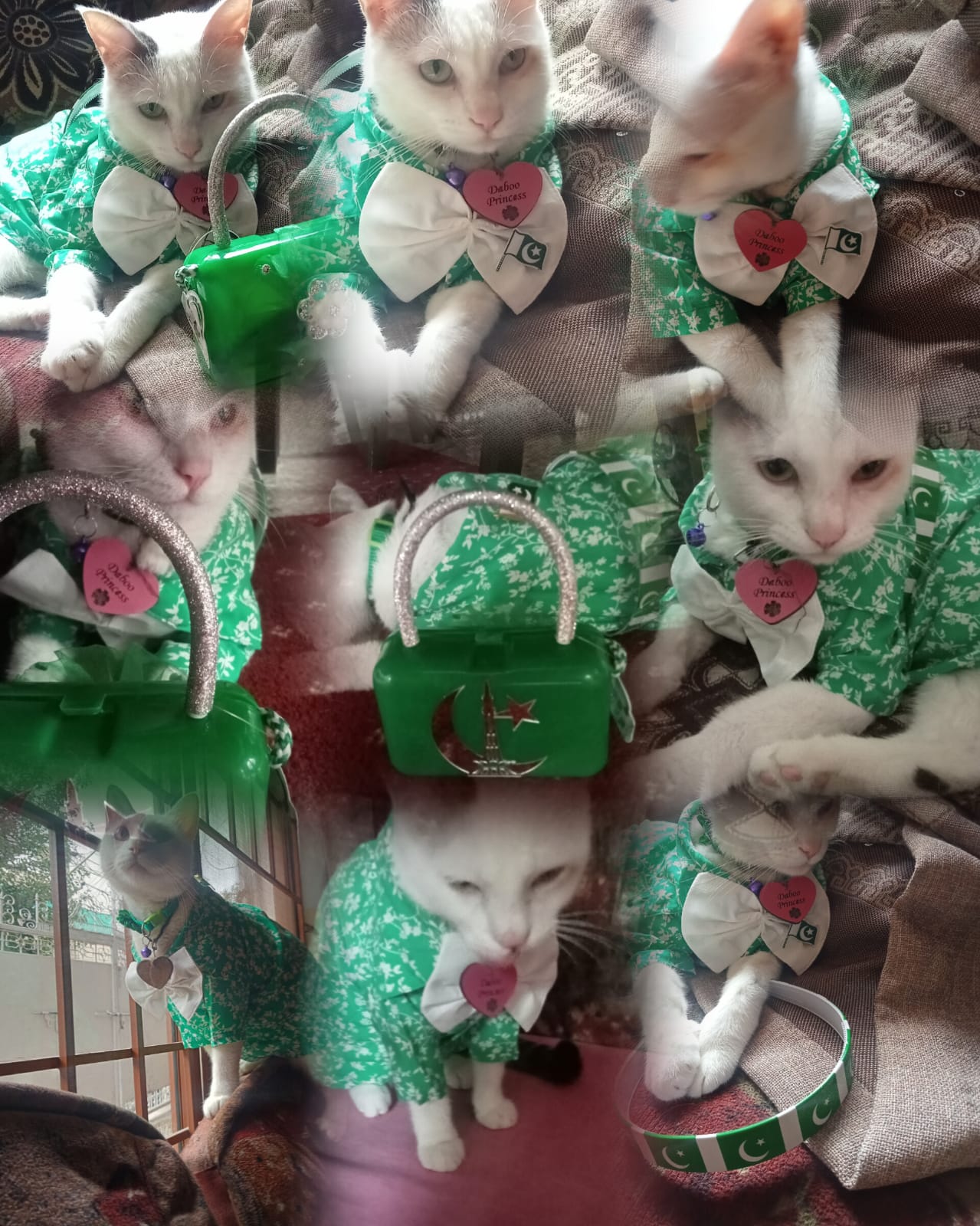

Sometimes Allah sends mercy to our doorstep disguised as the most fragile, trembling soul—a tiny life carrying wounds that quietly mirror our own. When we care for a creature that cannot speak, every gesture we offer becomes a quiet prayer, and every bowl we fill reflects the state of our own hearts. True wisdom teaches us that love is never found in force or rigid control, but in gentle presence, patience, and honoring the sacred trust (Amanah) placed in our hands.What happens when the hidden rules we carry to protect ourselves quietly spill into the lives of those who depend on us? Step into the untold story of Daboo—a freezing, heartbroken stray kitten on an Islamabad porch who waited seven months to trust human touch, exposed the silent habits I didn’t even know I was holding onto, and taught me the true meaning of Ihsan (spiritual excellence and compassionate care).
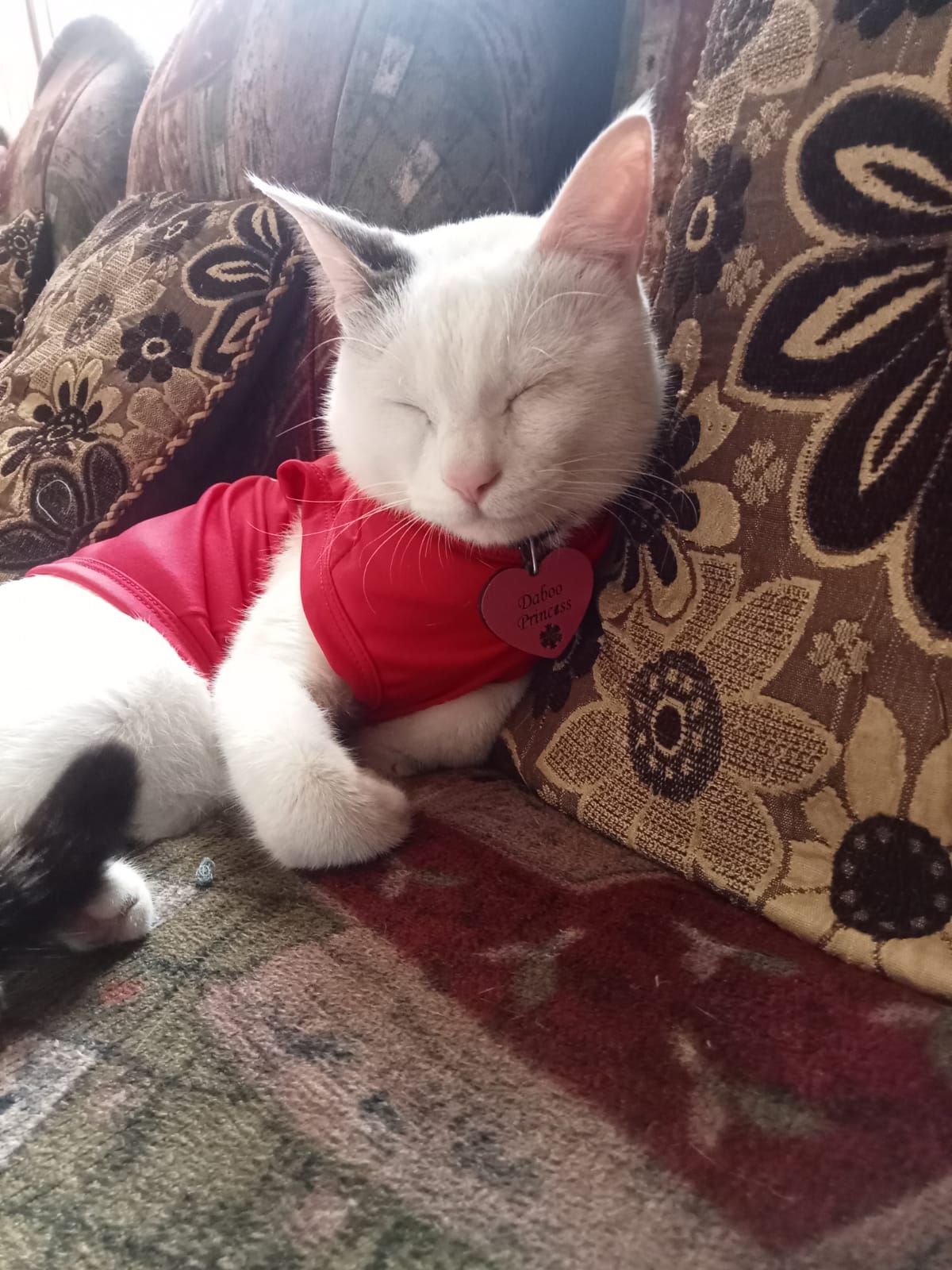
The Mirror Bowl: How Rescuing Daboo Exposed
Hidden Controlling Behaviors—and Saved Us Both
In clinical psychology and nutritional psychiatry, a substantial body of research has examined how an adult’s relationship with food shapes the way they feed those who depend on them. Across decades of systematic reviews and large-scale longitudinal studies—such as the Avon Longitudinal Study of Parents and Children (ALSPAC) and the Generation R and Gemini cohorts—clinicians have documented how maternal and paternal eating disorders frequently spill over into parental feeding practices. When a caregiver struggles with restriction, fear of weight gain, or emotional eating, those exact patterns often manifest in how they feed their children: through rigid mealtime monitoring, severe food restriction, pressuring a child to finish every bite, or using high-sugar treats as emotional soothing.
Yet when we turn our attention from children to companion animals, we encounter a striking, vastly under-researched blind spot. While dozens of studies explore how therapy pets reduce anxiety for patients in recovery, almost no clinical literature investigates the reverse: what happens to a pet’s nutrition, weight, and emotional stability when their caregiver lives with an eating disorder or lingering rigid food rules?
Because pets rely entirely on us to fill their bowls—and cannot speak up when portions are too small or diets are unbalanced—they silently absorb our unexamined habits.
I first realized how deeply this pattern runs during a group discussion session. As patients spoke openly about recovery, a striking, strange truth emerged: many shared that whenever their care team told them they needed to gain weight, they unconsciously made sure their pets gained weight too. Conversely, whenever they slipped back into restricting or trying to lose weight, their pets began losing weight right alongside them. It was uncanny to hear—almost as if the animals’ bodies were quietly mirroring whatever weight trajectory their owners were facing.
One story from that session stood out in particular. A patient shared that her cat had been gaining weight at record speed. Instead of buying groceries for her house, she would fill her shopping bag with treats for her cat and for herself. At night, she felt she had a companion who would share those treats with her, and they would spend their evenings eating them together. Yet the outcome was heartbreaking: the cat completely stopped eating proper food, refusing everything except those high-sugar, additive-heavy treats—consuming the exact same unhealthy diet as her owner, which left her struggling with serious weight and emotional problems and becoming overly hyper and restless.
Hearing those stories left me stunned—yet I never imagined I would experience the quiet, restrictive side of that mirror myself, mostly because I never thought of myself as an “animal person” at all.
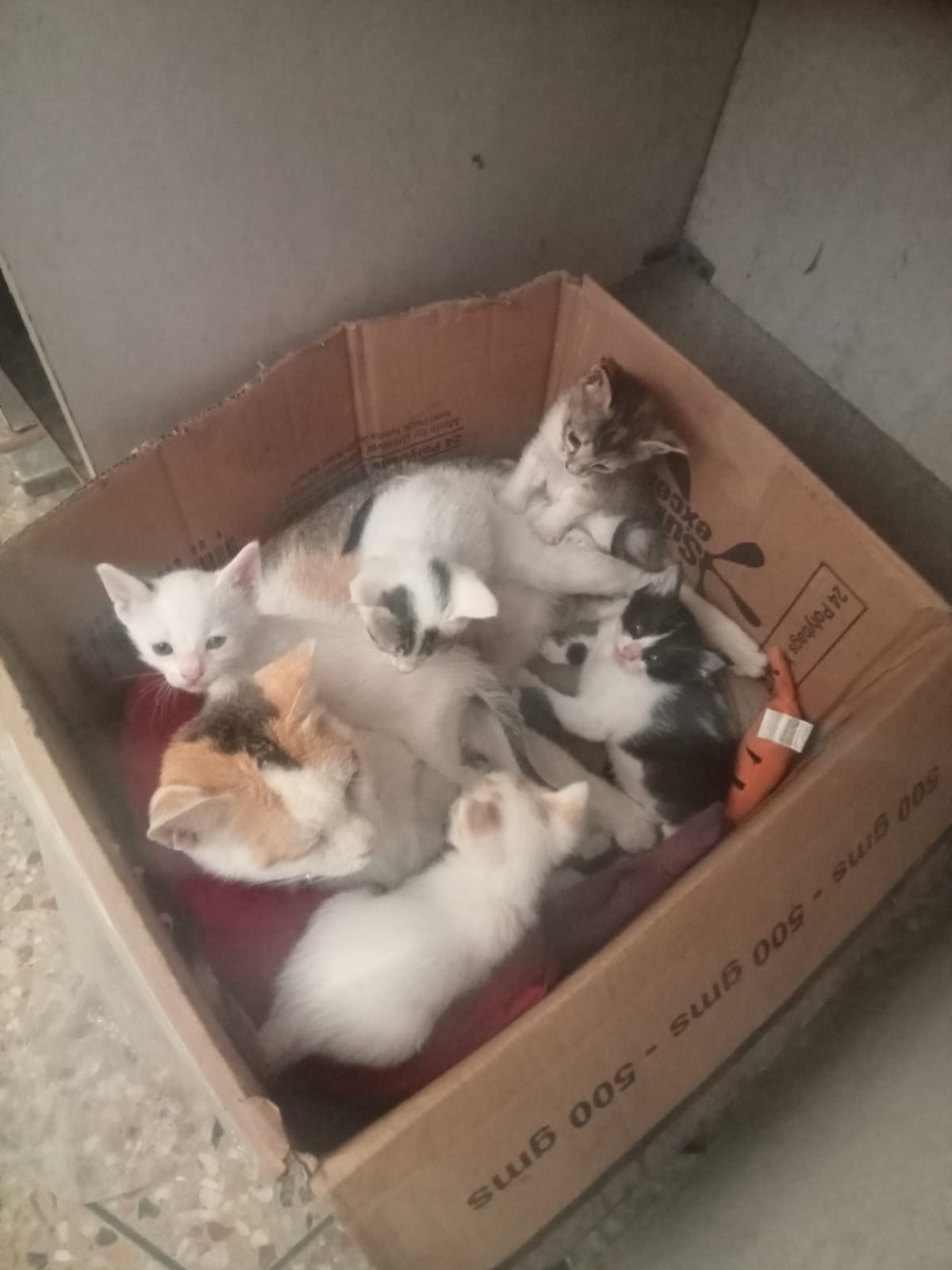
Everything changed that crisp October in Islamabad, when a stray cat gave birth to five tiny kittens right on our front porch. I had never cared for an animal before. In my ignorance, I used to think animals simply belonged outside. At first, we simply put out food for the mother cat whenever we could. Then came the shock of November. As the winter chill set in, one of the kittens became critically ill.
When my mother and I rushed that sick kitten to the vet on that first freezing night, the vet looked at us and delivered a wake-up call I will never forget. He asked us plainly, “How could you leave them outside? Didn’t you know winter was coming? If Allah sent them your way, why did you leave them out in the cold? They are your responsibility.” He laid out the entire Islamic framework of stewardship—reminding us of the Quranic truth:
“And there is no creature on [or within]the earth or bird that flies with its wings except [that they are]communities like you.” — Surah Al-An’am (6:38)
That night, I understood that when Allah places a vulnerable creature at your doorstep, protecting it is a sacred trust (Amanah). We were devastated and stunned after that tiny kitten tragically passed away. Following the vet’s instructions, we immediately brought the remaining four kittens indoors at night for warmth, letting them outside by day so they could nurse from their mother.
Because she was a wild stray, the mother unknowingly carried a virus that reinfected the fragile kittens. Despite everything we tried, the illness swept through them.
I witnessed Daboo’s trauma firsthand when her fourth and final sibling passed away. It was Daboo who alerted me. When I looked inside the cat house, her sibling was having violent fits. I lifted that tiny kitten into my arms, and it passed away right there as I held it. Looking back at Daboo, seeing how terribly sick she was herself and watching her sit there shivering uncontrollably in shock, completely broke my heart. I had never known such raw emotions—never seen such pure vulnerability and grief in any living creature before.
She became motionless and refused to eat, simply mewing softly in despair. And then came a moment I will carry in my soul forever: while I was praying, grieving little Daboo walked over, gently pulled at my clothes, and climbed onto my lap, mewing for comfort. I froze—because I had never touched an animal in my entire life. Neither I nor anyone in my family had any experience or training with animals.
Overwhelmed by panic after losing her fourth sibling, I honestly doubted how I could ever care for such a fragile survivor on my own—and in my fear, I tried to give her up for adoption. Fortunately, in Pakistan, we are deeply blessed to have animal welfare organizations and veterinary teams who approach rescue from a truly holistic and spiritual perspective. When I reached out to those adoption centers, they told me gently that they were completely full, and asked if we would be willing to care for her until January, promising they would help place her with a family once space opened up.
Those compassionate teams and our vet comforted me in my panic and counselled me patiently on how to care for her—explaining that she had no one left in this world, and that I was the one who needed to give her warmth and comfort right now. So I trained myself from scratch—learning how to gently touch her, how to hold her fragile body, and how to soothe her broken heart. As the Sufi poet Jalaluddin Rumi so tenderheartedly wrote:
“The wound is the place where the Light enters you.”
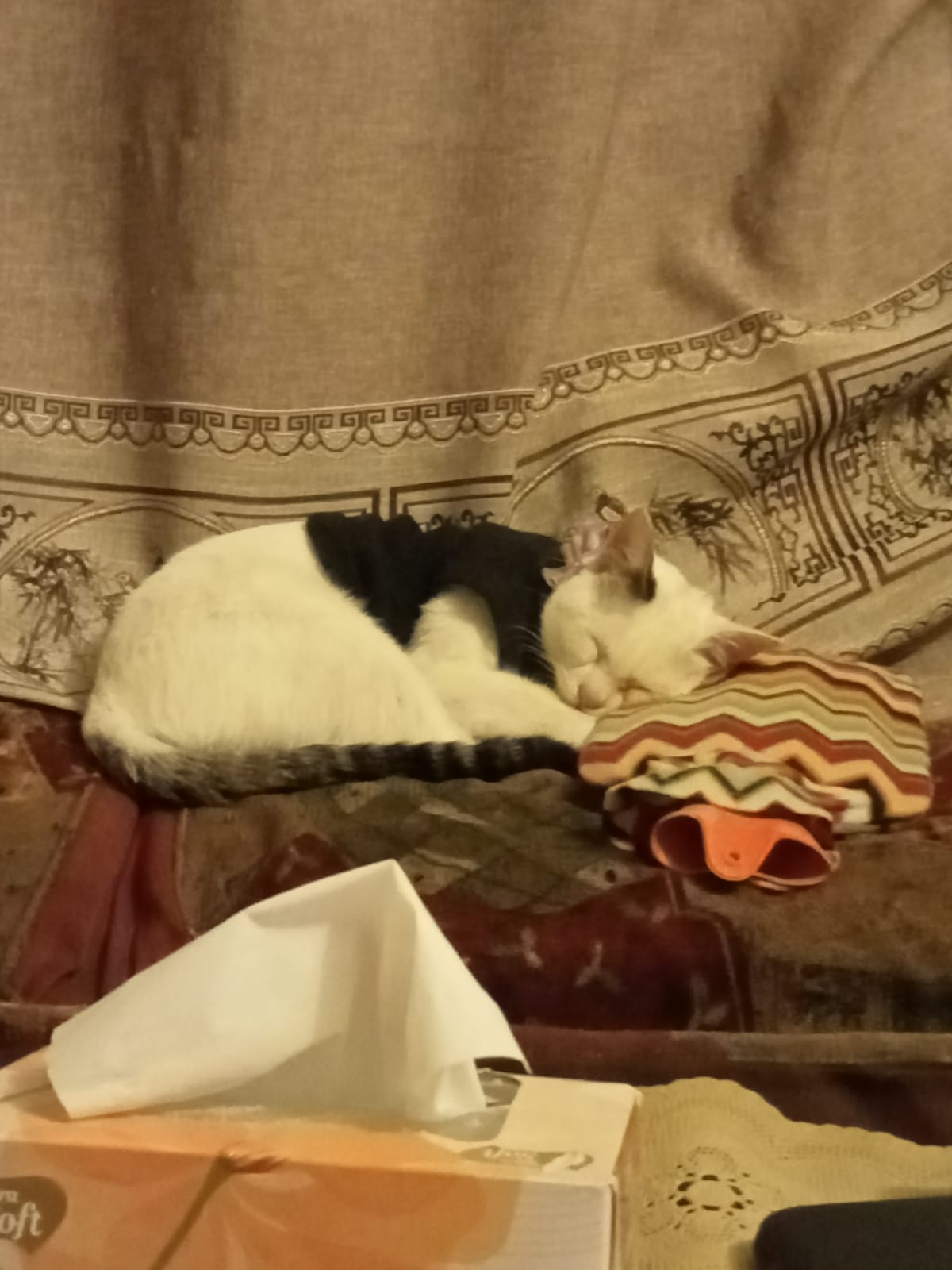
Daboo’s wound—and that prayer where she climbed onto my lap—became the exact place where mercy and purpose entered my life.
Daboo was the sole survivor—a tiny miracle left completely alone. Even from birth, she had been the smallest and weakest of the litter. While her siblings pushed forward to nurse, she was always the one left behind, severely underweight from the very start. She inherited a severe eye infection from her mother that nearly left her blind and left her tiny face swollen and disfigured. She wasn’t a “pretty” kitten that strangers stopped to admire; she looked visibly sick, fragile, and as though she had almost no chance of survival.
In our naivety, we initially told ourselves we were only sheltering her until January—or perhaps February or March, hoping that once the harsh Islamabad winter passed and the weather improved, we could either place her with a family or release her back outside to her mother. We had no idea that within just three weeks of being indoors, her mother would completely disown her. Leaving her outside was impossible—she was freezing at night, sitting motionless in front of the radiator and crying softly for her lost family.

For the first time in my life, I was caring for a fragile soul who was 100% dependent on me. Through the winter, her body temperature would drop dangerously low. We dressed her in multiple warm layers, kept the room heated, and tucked hot water bottles beside her. She went on to endure two surgeries—including the removal of a cancerous cyst. Just as January approached and we wondered whether to follow through with placing her for adoption, that diagnosis settled everything.
Friends and mentors counseled and encouraged me, reminding me of the deep blessings of mercy in Islam and the words of Prophet Muhammad ﷺ:
“Be merciful to those on the earth, and the One above the heavens will have mercy upon you.” — Sunan Abi Dawud
In Islamic tradition, cats are celebrated as pure, gentle companions (At-Tawwafun—”those who go around among you”). Prophet Muhammad ﷺ showed extraordinary tenderness toward cats—most famously cutting off the sleeve of his own garment rather than disturb his beloved cat, Muezza, who had fallen asleep on it before prayer. Hearing those teachings opened my eyes: Daboo was sent by Allah, and she was meant to stay with us.
Yet nursing Daboo back to health after her surgery taught me one of the deepest lessons of my life about what it truly means to be a caregiver for someone who is physically weak, emotionally disturbed, and deeply traumatized.
After her surgery, Daboo was completely petrified of human touch. She wouldn’t come near me, trembling with fear and refusing her cat house, choosing instead to sleep on my bed from a safe distance. It took seven full months of quiet, unwavering patience before she finally trusted me enough to walk over and sit on my lap again. Even today, she remains very selective about physical contact. Whenever I feel the urge to scoop her up and cuddle her, I have to stop myself—because forcing affection only terrifies her.
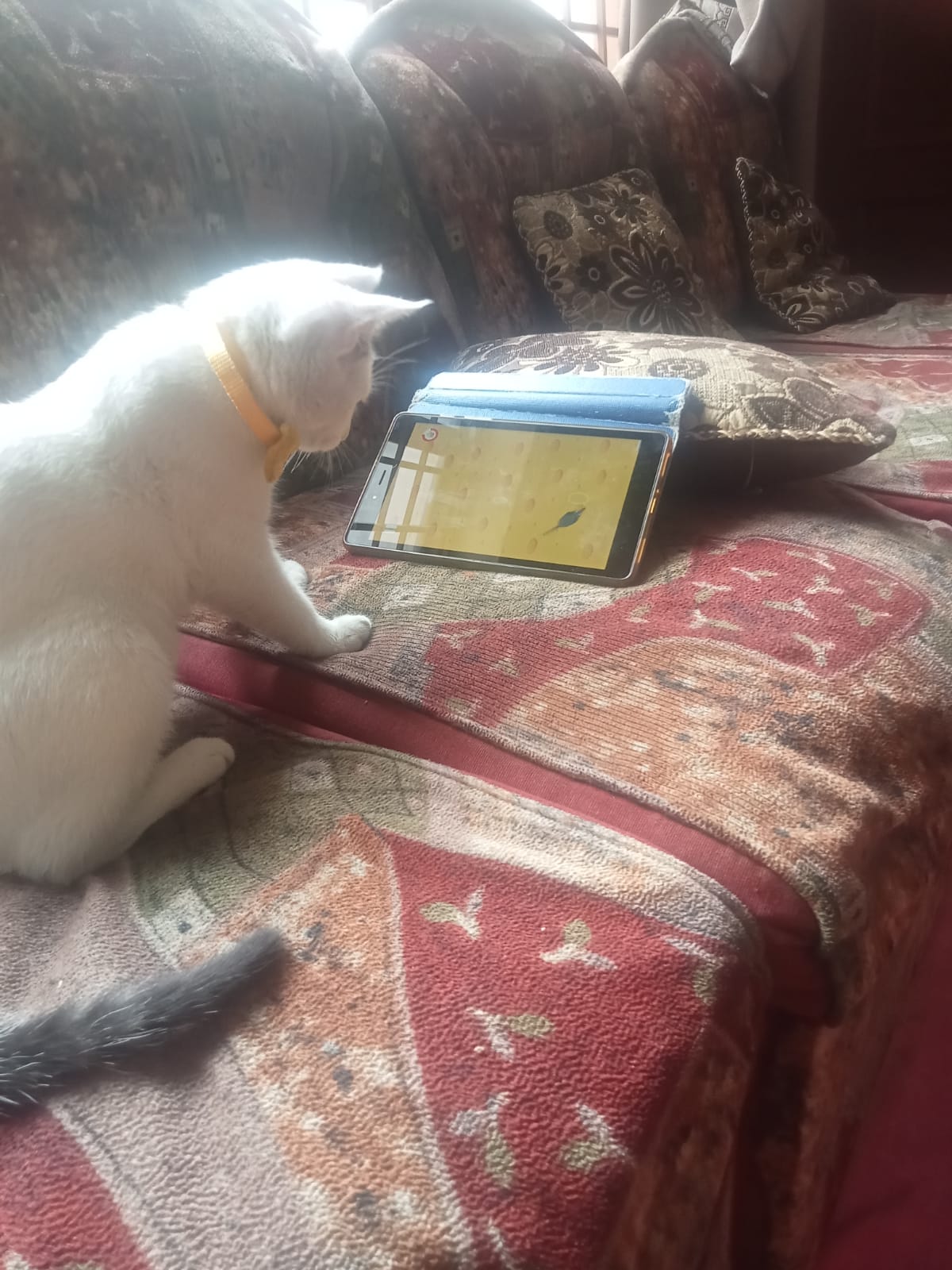
Caring for Daboo taught me the profound vulnerability of touch. When someone is healing from trauma, you cannot force your way in or prioritize what you want; you have to slow down, watch closely for their cues, respect their boundaries, and give them what they need on their own timeline. And the reward for that patience is far greater: on the rare, unexpected moments when Daboo chooses on her own to come forward and shower me with affection, it truly makes my entire day.
At the same time, in my fierce determination never to lose her, my own past habits merged into my caregiving. During my illness, I had reached a point where I had to follow a very specific, medically guided diet to reverse osteoporosis, peripheral neuropathy, and severe nutritional deficiencies. Eating with intense precision had been necessary for my own physical recovery—and without realizing it, those previous behaviors subconsciously crept into my present with Daboo.
Desperate for her longevity and good health, I became hyper-focused on “clean eating” and strict rules for her bowl. I insisted she eat only freshly cooked meals every single day, weighed and portioned with intense precision, and severely restricted her treats. Whenever she refused her food or left even a small amount behind, I would go completely out of my mind with worry, carrying that anxiety throughout the entire day. My mother would gently try to reason with me, saying, “So what if she didn’t finish her food? She’s just like us—she has a choice.” Yet I couldn’t let it go, insisting she had to finish her meal. Looking back, I realized why it triggered such intense panic: watching an unfinished bowl brought back painful memories of my days in treatment daycare, where finishing every single bite of our meals was mandatory.
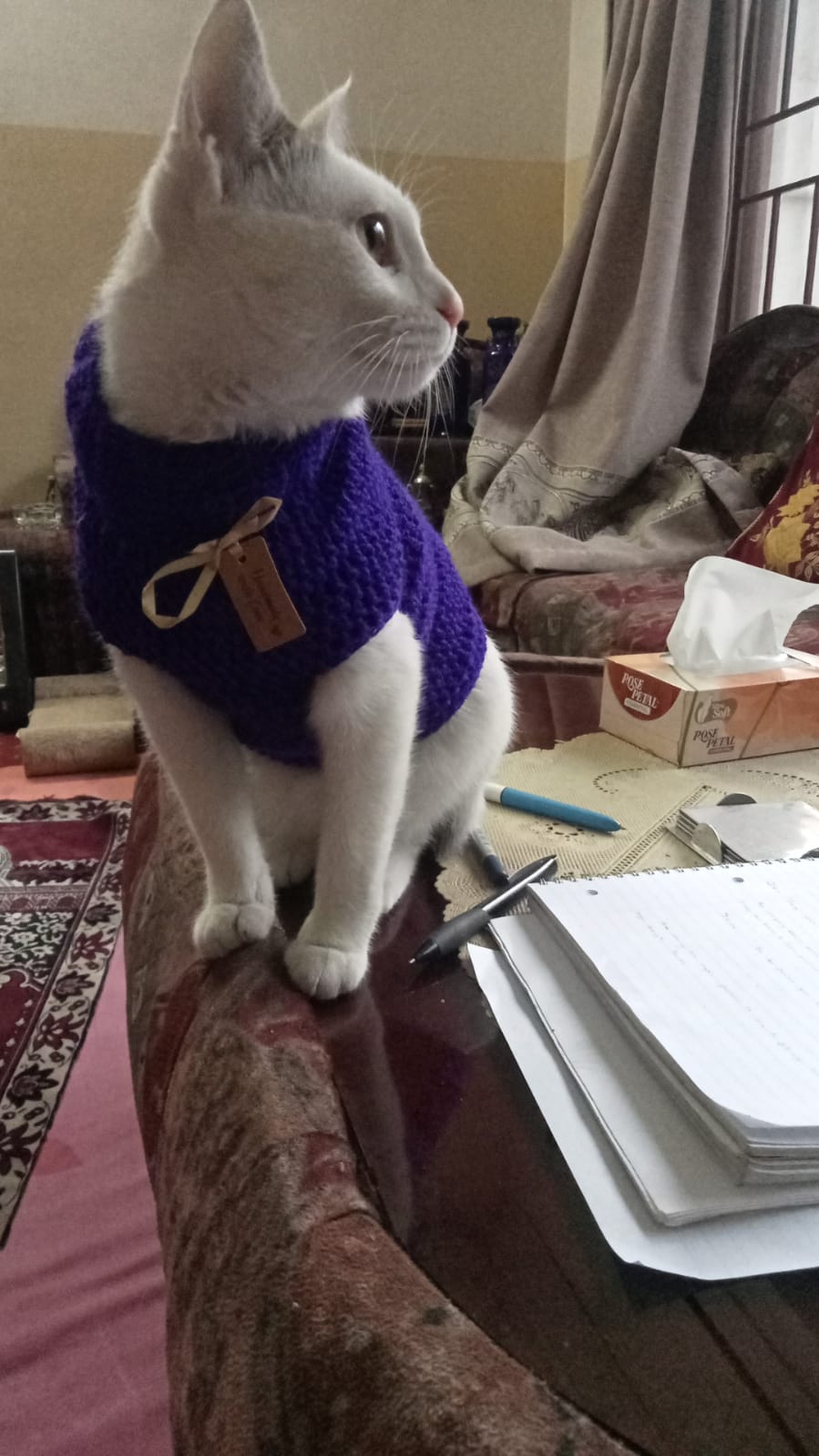
Meanwhile, I didn’t realize that during the long, hot summer days in Islamabad, our shifting routines—combined with her high energy levels—were actually causing her to lose weight.
The true wake-up call came when she stayed at a pet boarding facility while I was traveling in Turkey and the UK. The staff were genuinely shocked at how thin she had become. I owe that boarding team immense gratitude: they noticed immediately that she had grown selective and easily distracted, running off to hide rather than finishing her food. They solved it with patience and wisdom—gently placing her in a calm, restricted area with zero toys or distractions during mealtimes, releasing her to come out and play only after she had finished eating. Because she is such an active cat, they also explained that she needed much more calorie-dense nutrition rather than light “clean” meals.
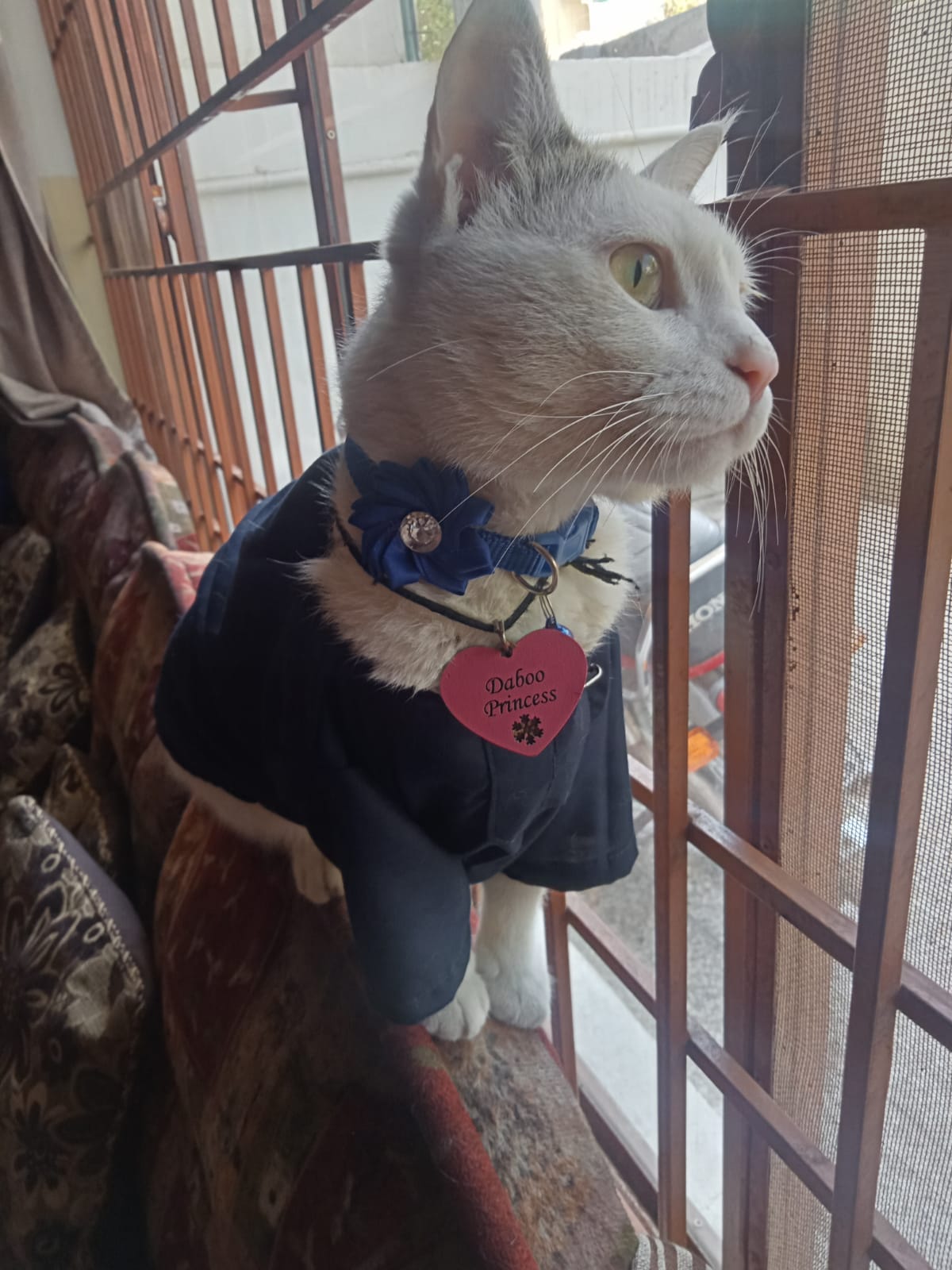
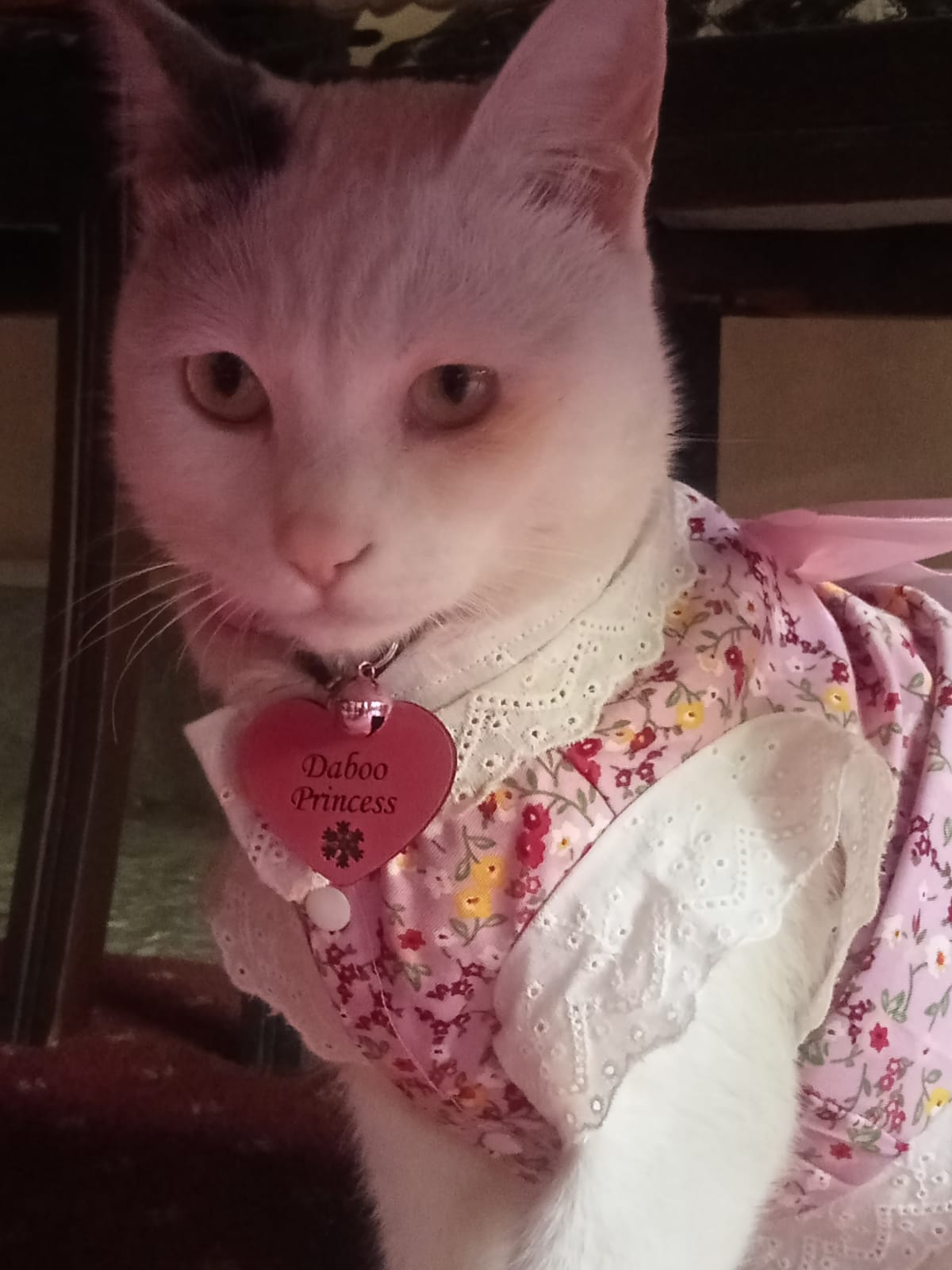
That moment was a mirror. It exposed how those past rigid rules had slipped into my present life unnoticed, shaping how I fed her. Alhamdulillah, I now follow that nutrient-dense plan faithfully, and the transformation has been extraordinary. Today, Daboo looks radiant, healthy, and strong—proving beyond a shadow of a doubt that proper nutrition and a balanced diet can reverse physical fragility, just as patient love and care can heal deep trauma and bring a soul back to life. Still, it boggles my mind and deeply amuses me to see how much of me she has absorbed: she refuses all local brands of tuna and will only touch John West tuna from the UK! Watching her selective eating habits makes me smile every time, because I know she picked that up straight from how picky I used to be myself.
This journey taught me a vital lesson that I urge every pet owner—especially anyone navigating recovery—to remember: when you bring a dependent creature into your home, whether a child or a cat, you must be completely dedicated and devoted to them. Animals are fragile; once they fall ill, they can decline very quickly. We have to stay vigilant, attend regular checkups, and never guess when it comes to their nutrition. If you have anxieties around food, be honest with your veterinarian. Explain your fears, ask them to give you a clear, structured feeding plan, and follow that plan faithfully.
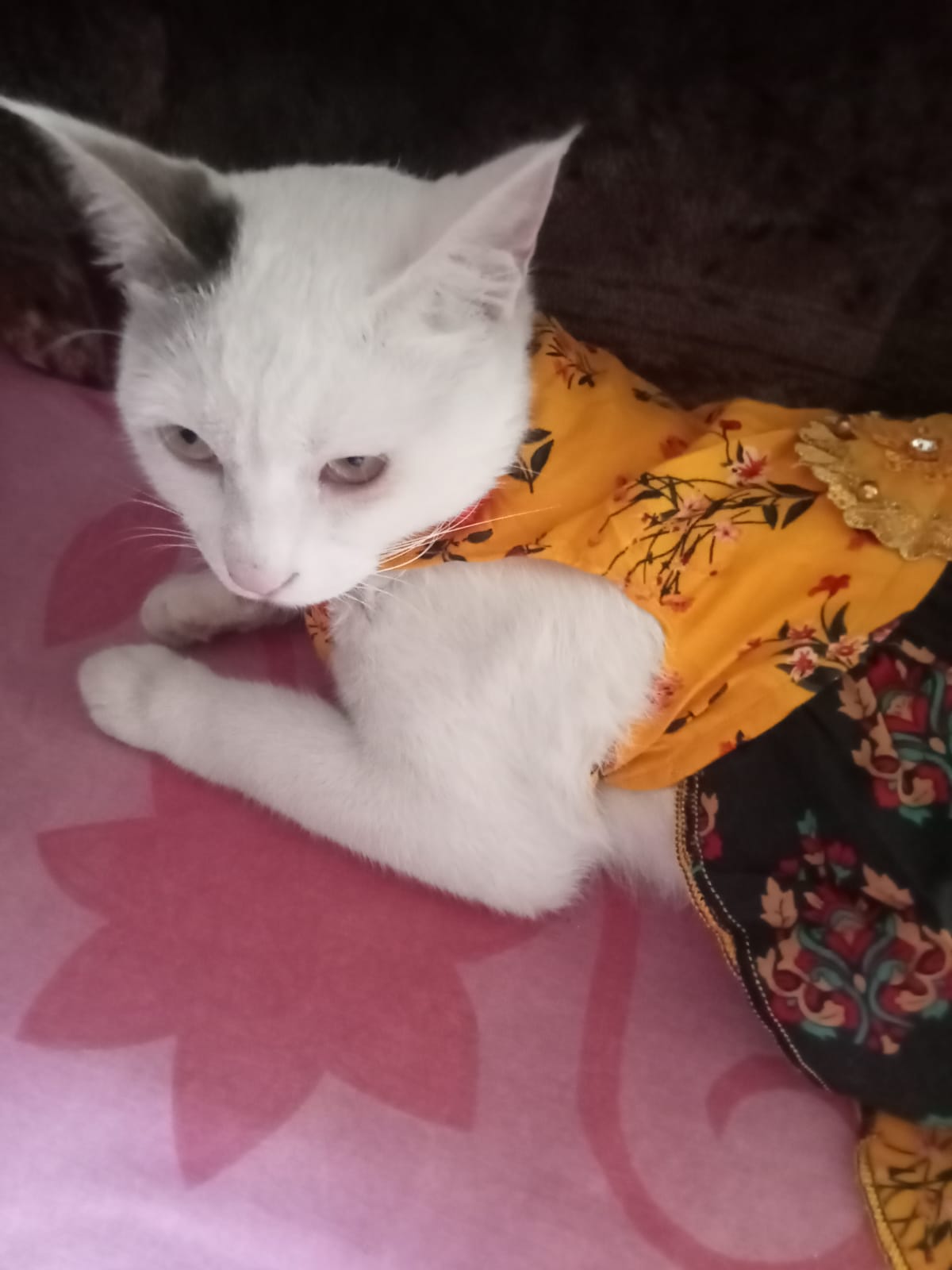
Looking back, I don’t think anyone could have ever convinced me to take on a pet. My life was already full—busy with my work, my cases around eating disorders, and constant travel. Yet Daboo has become my companion even on the road, traveling right alongside me to Lahore and grounding me wherever we go. She hasn’t just captured my heart—she has captured the hearts of our entire neighborhood. I cannot even count how many neighbors stop to ask about her, and whenever I travel for work, colleagues and friends send gifts specifically for her, so I always come home with bags of presents for Daboo. People are constantly amazed by how gentle, sensible, and well-mannered she is.
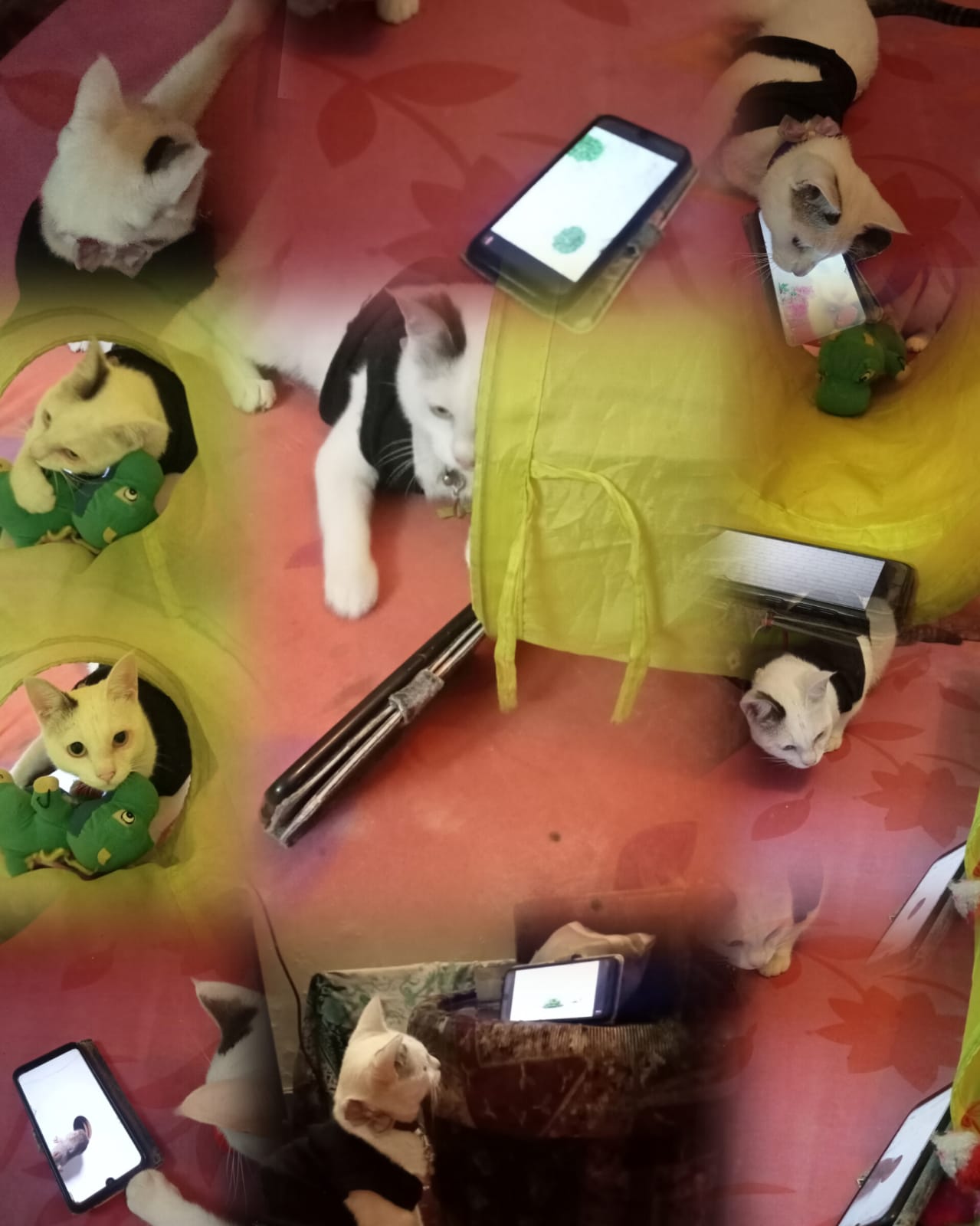
Caring for her has also taught me profound patience—not only with myself, but with my own clients as well. As the great Sufi master Rumi reminds us:
“In your light I learn how to love. In your beauty, how to make poems. You dance inside my chest where no one sees you, but sometimes I do, and that sight becomes this art.”
And as Shaykh Saadi wrote in the Gulistan about the unity of all creation:
“All creation are limbs of one body, created from one essence. When one limb suffers pain, the rest cannot remain at peace.”
Today, I marvel at how perfect the rules of Islam truly are. I used to think animals belonged outside, and everyone who knows me is amazed by this transformation—because while I was never a “pet person,” I am completely a Daboo person. I truly believe it is her silent prayers, her presence, and the selfless care she requires that have made me a far better human being.
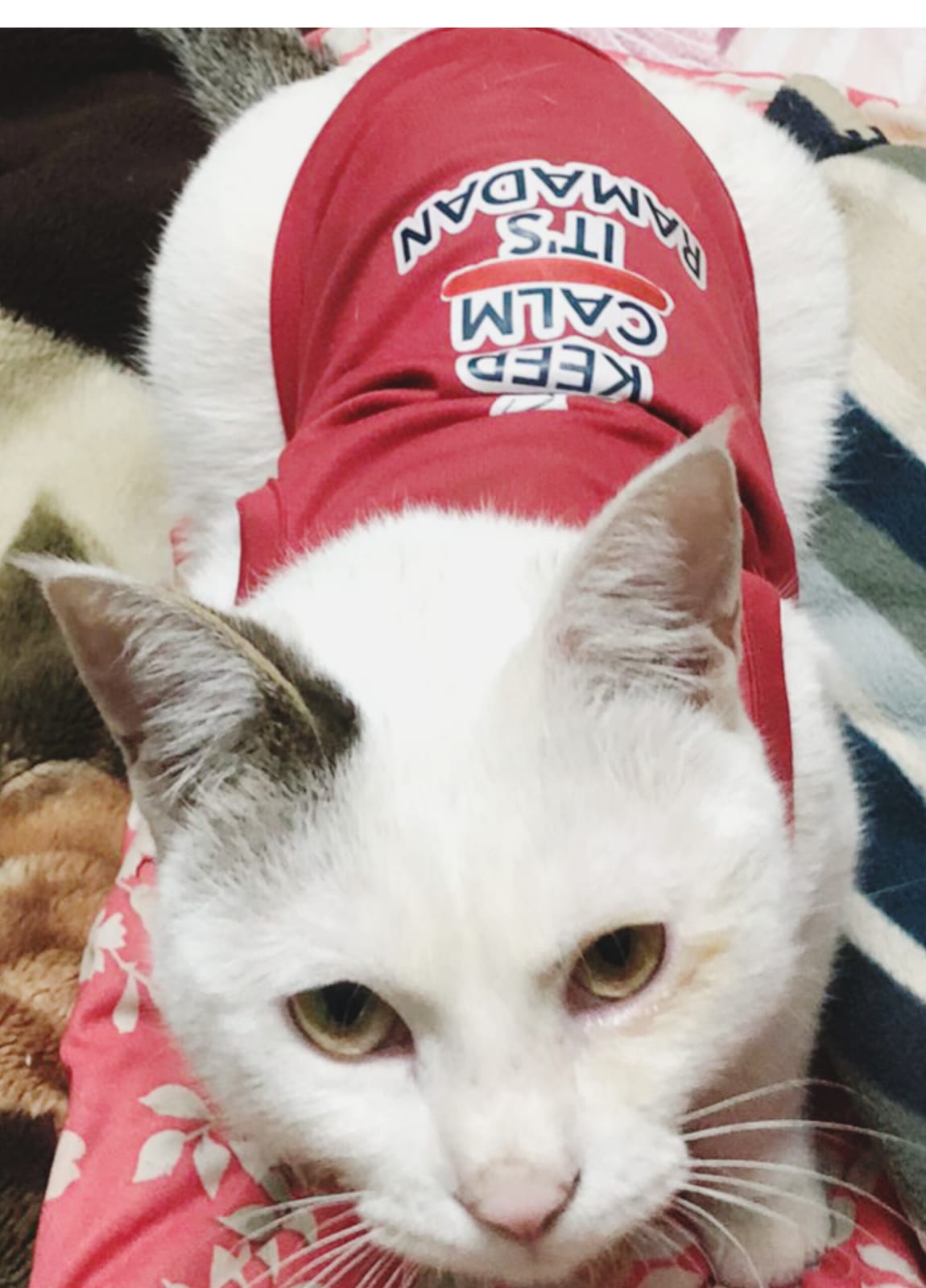
Sharing our life in Pakistan—from the hot Islamabad summers and trips to Lahore to the cozy winter nights side by side—is a pure blessing. There is no greater happiness than taking Daboo to the vet for her checkups and hearing that she is thriving and protected against winter illnesses. Alhamdulillah, through my own illness and recovery, I learned the true value of health and well-being—and every time I look at Daboo’s joyful, healthy life, I see proof of Allah’s promise:
“Is the reward for goodness anything other than goodness?”— Surah Ar-Rahman (55:60)
Every day with her is living proof that steady, compassionate nourishment—and patient, gentle love—can reverse trauma and allow every living soul to thrive.