

From a young age, we are told to love ourselves, but how is anyone supposed to love themselves when beauty standards are unrealistic and achievable?
Menk’s caution against altering one’s appearance through filters is particularly emotional. The psychological outcomes of internalizing an artificially enhanced image are underscored, as individuals may unintentionally cultivate self-hate and an unattainable pursuit of an idealized self.
Dear Readers,
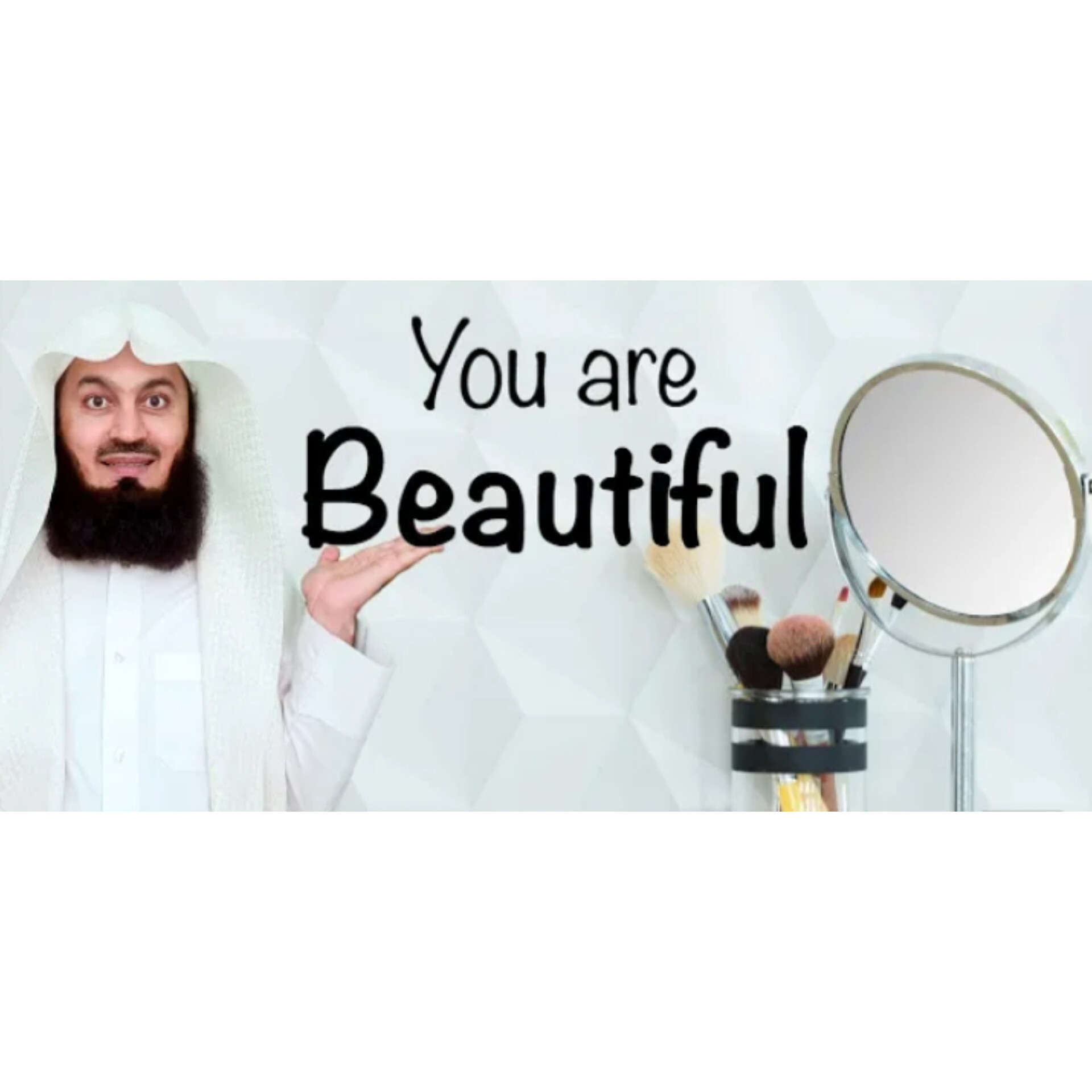
Please find below guest post by Mayar Assaf, ‘HEY… YOU ARE BEAUTIFUL 😍 LOVE YOURSELF – MUFTI MENK. Social media can negatively impact how young people and adults view their bodies. From a young age, we are told to love ourselves, but how is anyone supposed to love themselves when beauty standards are unrealistic and achievable? Mufti Menk addresses these issues. Thank you Mayar for this analysis.
About Mufti Menk:
Mufti Dr Ismail Menk is a leading global Islamic scholar born and raised in Zimbabwe. He studied Shariah in Madinah and holds a Doctorate of Social Guidance from Aldersgate University.
Mufti Menk’s work has gained worldwide recognition and he has been named one of “The Top 500 Most Influential Muslims in the World” since 2010.
He has millions of followers across his social media platforms. His personable style and down to earth approach has made him one of the most sought after scholars in our time. He has endeared himself to people with his much loved lecture series, a Mufti Menk hallmark.
Mufti travels the world spreading a simple but profound message: “Do good, help others while preparing for the Hereafter”.
HEY… YOU ARE BEAUTIFUL 😍 LOVE
YOURSELF – MUFTI MENK
Article By: Mayar Assaf
In this insightful video, Mufti Menk explained the profound importance of self-love, emphasizing how Allah (swt) has crafted each of us in the most exquisite form imaginable. He imparts valuable guidance on cherishing our unique attributes—hair, nose, color, shape, eyes, and body— and being grateful for every aspect of our being.
He wisely highlights the Quranic prohibition against allowing ourselves to be enslaved by societal standards that compel us to criticize our physical appearance. The incessant pursuit of meeting external expectations in order to gain societal acceptance contradicts the fundamental teachings of Islam. Allah encourages us to appreciate the beauty inherent in our diversity, transcending superficial judgments based on looks and conforming to peoples standards.
Addressing the prevalent use of filters, Menk acknowledges their acceptance to a certain extent, allowing for minor enhancements. However, he warns against filters that drastically change one’s appearance. Such changes can lead to a dangerous subconscious reference, fostering self-hate, diminished self-confidence, and an unhealthy obsession with cosmetic surgeries.
Islamic teachings advocate modesty and covering —a practice that signifies the insignificance of external appearances. The emphasis is on recognizing the intrinsic value within each individual, transcending the superficial aspects of the material world.
In conclusion, Menk stresses that Allah (swt) desires our liberation from the superficial standards dictated by culture, society, and individuals. The core message is succinctly encapsulated in the profound statement, “You are who Allah created you to be.” This concluding message serves as a beacon of wisdom, encouraging individuals to reflect deeply and embrace themselves unconditionally.
Menk’s words echo the teachings of Islam, urging believers to liberate themselves from the shackles of societal expectations. The message resonates in a world dominated by unrealistic beauty standards, fostering self-love, and appreciation for the unique creation that each person represents.
As we delve into Menk’s video, it becomes evident that the core of his message lies in exposing the societal norms that perpetuate unrealistic beauty standards. Islam, as a guiding light, advocates for self-love, urging individuals to appreciate the divine craftsmanship evident in their existence.
Menk’s caution against altering one’s appearance through filters is particularly emotional. The psychological outcomes of internalizing an artificially enhanced image are underscored, as individuals may unintentionally cultivate self-hate and an unattainable pursuit of an idealized self.
This insight is invaluable in a world increasingly influenced by digital increment and the pursuit of an unattainable aesthetic.
Furthermore, Menk’s emphasis on modesty and covering ourselves both males and females serve as a counter-narrative to the prevailing obsession with physical appearances. Islam’s call to modesty is a reminder that true beauty lies in the character, virtues, and inner essence of an individual, transcending the ephemeral nature of physical attributes. And look after the jewel inside ourselves rather than our out look.
In light of Menk’s teachings, it becomes clear that Islam advocates a holistic approach to self love—one that extends beyond the superficial and materialistic. The liberation from societal expectations, as illustrated by Menk, empowers individuals to embrace their authentic selves, unburdened by the relentless pursuit of societal approval.
In essence, Menk’s video serves as a timely reminder to break free from the chains of societal expectations and embrace the authenticity of one’s being. His words echo the core teachings of Islam, urging believers to prioritize self-love over societal validation. As we navigate the intricacies of self-acceptance, let us reflect on Menk’s profound message and strive to love ourselves as Allah (swt) intended.
REF: https://youtu.be/oJre37_3lyU?si=ojCiksHN-_Jy3Udx

